What is SROI and How to Calculate it? (Steps, Formula and Examples)

Ayush Bagga
Founder-CEO
Apr 23, 2025
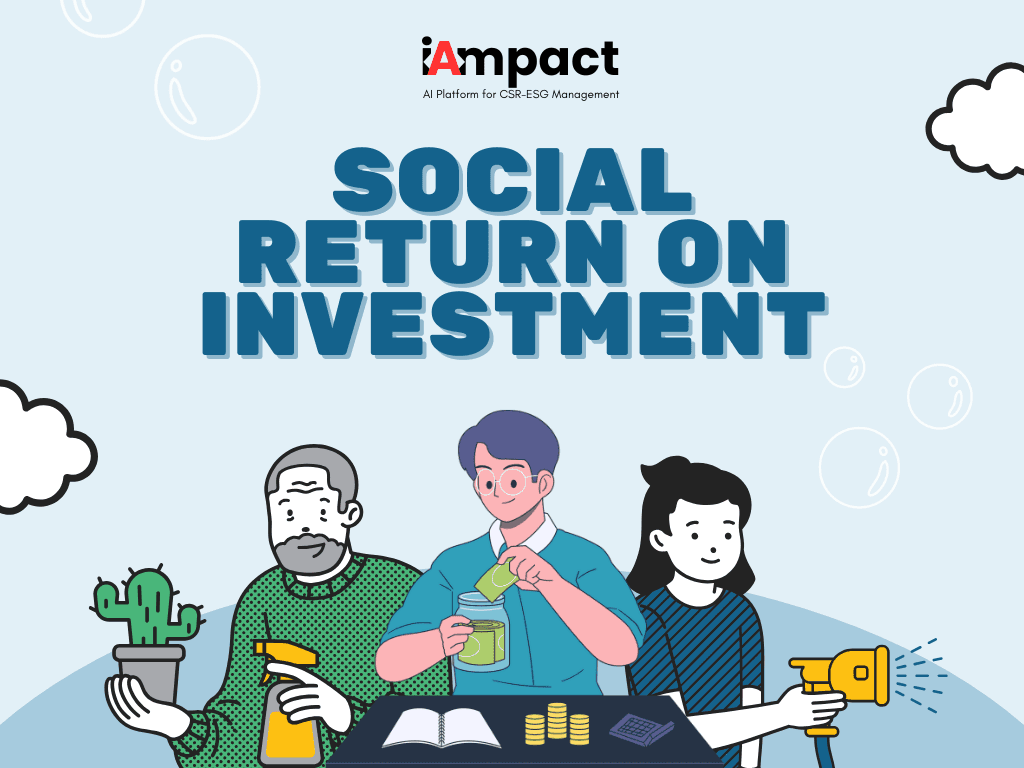
What is Social Return on Investment and How to Calculate it? (With Steps, Formula and Examples)
Social Return on Investment is a framework that measures the social, environmental, and economic value generated for every rupee invested in a CSR project. It converts outcomes into monetary terms, helping organisations understand whether their programmes create meaningful change. SROI is important because it promotes accountability, evidence-based decision making, and transparent CSR-2 compliant reporting.
Introduction
Companies across India are increasingly asking one critical question:
“For every rupee we spend on CSR, what real change are we creating?”
This is where Social Return on Investment (SROI) becomes essential. Unlike simple output metrics, such as number of students trained or trees planted, SROI quantifies true, transformative outcomes like increased incomes, improved health, reduced carbon emissions, or enhanced learning levels.
In a landscape where CSR spending crossed ₹25,000 crore in 2023, organisations want credible, data-backed evidence of impact. SROI enables exactly that.
What is Social Return on Investment (SROI)?
SROI is an impact measurement methodology that assigns monetary value to social, environmental, and economic outcomes created by a programme.
In simple words:
It tells you how much social value is generated for every ₹1 invested.
Example
A livelihood programme costs ₹50 lakh
It led to income increases worth ₹2 crore for women beneficiaries
SROI = 2,00,00,000 / 50,00,000 = 4:1
Meaning:
Every rupee invested generated ₹4 in social value.
Types of SROI
1. Forecast SROI
Used before a project starts. Helps decide whether to invest.
Example:
A corporate uses SROI projections to compare two skill development models—digital retail vs. tailoring. The model with higher forecast SROI receives funding.
2. Evaluative SROI
Used after implementation to assess actual outcomes.
Example:
An education NGO conducts an evaluative SROI and discovers that improved learning outcomes created value 2.5× higher than infrastructural upgrades.
Why is SROI Important for CSR?
1. It Converts CSR Efforts into Tangible Value
Most CSR reports list activities, not real impact.
SROI answers:
Did incomes rise?
Did health improve?
Did carbon footprint reduce?
Example:
A water project reduces women’s daily water collection time by 2 hours.
SROI values this time in monetary terms to show real productivity gains.
2. It Enables Evidence-Based Decision Making
Leaders can compare which interventions deliver the highest value per rupee.
Example:
A corporate finds that:
Nutrition programme SROI = 1.8
STEM education programme SROI = 4.2
Funding is redirected to the more impactful model.
3. It Enhances Transparency and Trust
SROI provides confidence to:
Boards
MCA auditors
Investors
Beneficiaries
Project partners
Numbers build legitimacy.
Instead of “200 farmers trained”, SROI reveals:
“₹1 invested created ₹3.7 in improved farm income.”
4. It Helps with CSR-2 and MCA Compliance
The Ministry of Corporate Affairs increasingly promotes:
Outcome-based CSR
Data-driven reporting
Impact assessments for large projects
SROI provides a structured methodology to show compliance during audits.
5. It Highlights Hidden or Intangible Benefits
Many CSR benefits are not immediately visible:
Confidence gained among girls
Higher school attendance
Reduced stress after access to clean water
SROI captures these indirect yet powerful outcomes.
The Six-Step SROI Process (Simplified)
1. Stakeholder Identification
Beneficiaries, community leaders, NGOs, government bodies.
2. Mapping Outcomes
Outputs vs. outcomes vs. long-term change.
Example:
Training → Knowledge → Job placement → Income increase.
3. Evidencing Outcomes
Collecting data from surveys, attendance records, health tests, learning assessments.
4. Monetising Outcomes
Assigning financial value using:
Market rates
Opportunity cost
Productivity gains
Public expenditure saved
5. Calculating Impact
Adjust for:
Deadweight
Displacement
Attribution
Drop-off
6. Reporting and Communicating Results
Presenting SROI ratio + narrative + case stories.
Examples of SROI in Different CSR Sectors
1. Education
An EdTech intervention improves foundational learning in a district.
Cost: ₹1 crore
Social value: ₹4.7 crore (future earning potential)
SROI = 4.7
2. Health
Telemedicine program in rural areas reduces travel and income loss.
Cost: ₹25 lakh
Savings + productivity gained: ₹1.2 crore
SROI = 4.8
3. Livelihoods (Women’s SHGs)
Women trained in digital entrepreneurship increase monthly income by ₹3,000.
Annual programme cost: ₹40 lakh
Value created: ₹1.6 crore
SROI = 4.0
4. Environment (Tree Plantation)
Urban forestry reduces air pollution and increases property value.
Cost: ₹30 lakh
Social value created: ₹1.1 crore
SROI = 3.6
5. Water & Sanitation (WASH)
New RO plants reduce waterborne diseases by 37%.
Cost: ₹20 lakh
Healthcare savings + productivity: ₹58 lakh
SROI = 2.9
How iAmpact Helps Organisations Measure SROI Accurately
iAmpact makes SROI more reliable and easier to compute through:
1. AI-Based Data Capture
Automated WhatsApp surveys
On-ground partner reporting
Geotagged photos and timestamps
Ensures clean, verified beneficiary data.
2. Built-In SROI & Cost-Benefit Models
Ready templates
Automated monetisation
Industry benchmarks
Real-time SROI dashboard
3. Outcome Tracking Framework
Clear logic models from input → output → outcome → impact.
4. Audit-Ready CSR Reports
MCA-aligned formats including CSR-2 & BRSR-ready outputs.
5. Impact Comparison Across Projects
Helps CSR managers prioritise high-value interventions.
Conclusion
SROI is not just a framework, it's a mindset shift.
It encourages organisations to focus on outcomes, not activities.
In the evolving CSR landscape where accountability, transparency, and efficiency matter more than ever, SROI helps companies justify investments and design smarter interventions.
With platforms like iAmpact, the process becomes effortless, credible, and scalable.
FAQs
1. What is a good SROI ratio?
Most CSR projects in India range between 2:1 to 5:1, but context matters. Higher is not always better — credible evidence matters more than ratio size.
2. Is SROI mandatory for CSR projects?
Not mandatory, but highly recommended for large projects as per CSR-2 and impact assessment expectations.
3. How is SROI different from ROI?
ROI measures financial returns.
SROI measures social, environmental, and economic value, often intangible.
4. Can small NGOs calculate SROI?
Yes. Even small organisations can use simplified SROI to demonstrate value to donors.
5. How long does SROI measurement take?
Typically 2–12 weeks depending on project scale and data availability.
6. Does SROI work for behavioural change projects?
Absolutely. SROI can monetise outcomes like improved confidence, reduced stress, higher attendance, etc.
7. Can AI improve SROI calculations?
Yes. Platforms like iAmpact automate data collection, reduce human error, and generate near real-time SROI dashboards.
_____________________________
SROI, Social Return on Investment India, CSR impact measurement, CSR ROI, social value assessment, impact assessment India, MCA CSR measurement, CSR-2 reporting
What Has Kept the Social Sector Away from AI in India?
Why Do CSR Funds and Foundations Need All-in-One CSR Software in 2026?
What is SROI and How to Calculate it? (Steps, Formula and Examples)
CSR Trends and New Updates in 2026: What Corporates Must Prepare For
How Are CSR Foundations Monitoring and Evaluating Projects Using AI?
The evolution of Corporate Environmental Responsibility (CER) in 2026
Benefits of Impact Assessment Using Artificial Intelligence (AI)